
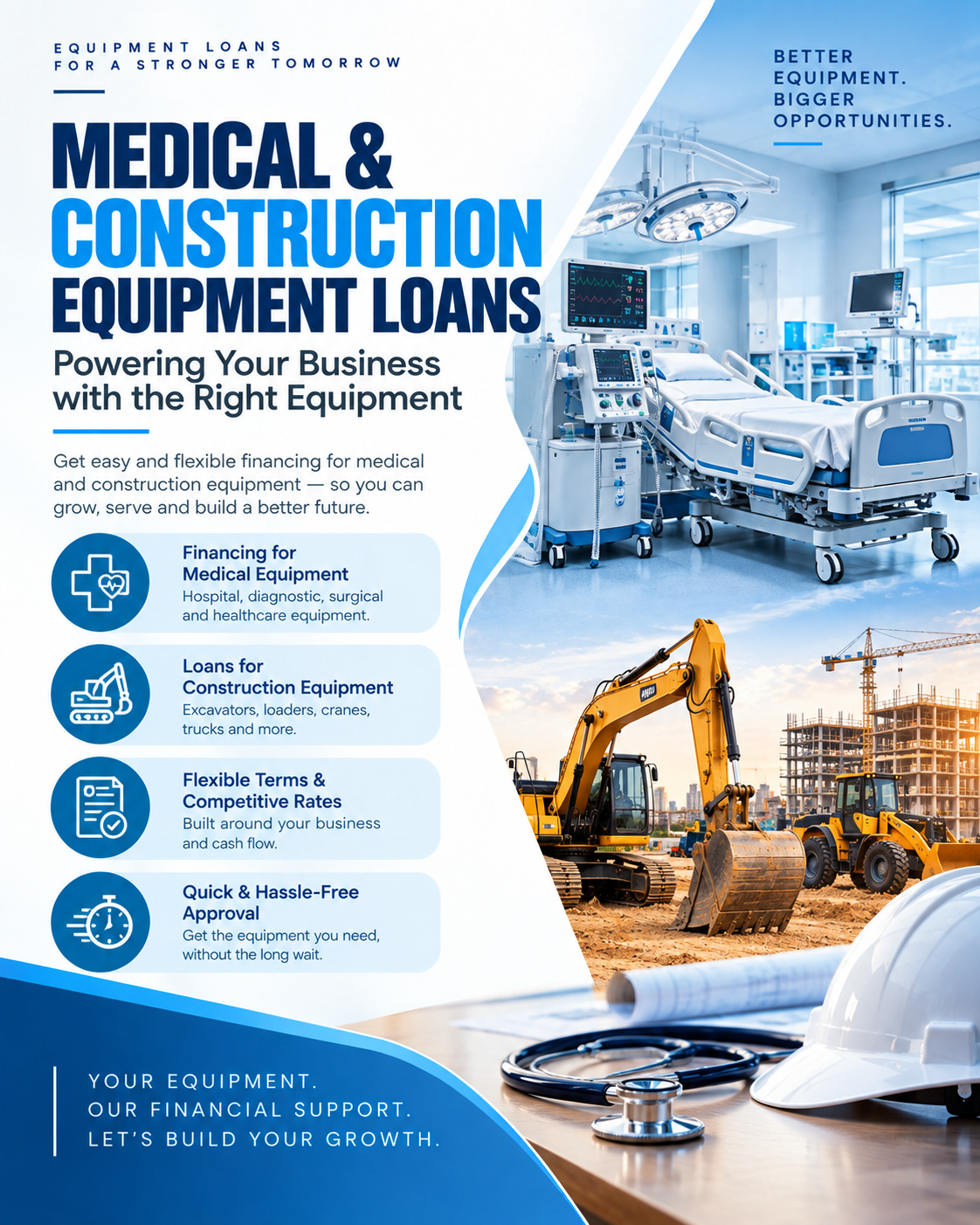
Loan for Commercial Purpose
A commercial-purpose loan is financing provided to an individual, business, firm, or company for a business or commercial activity rather than for personal consumption.
The purpose of the loan is important because the lender needs to establish that the funds are being used for an eligible business activity and that the proposed repayment will be supported by the business’s cash flows.
1. Common Commercial Purposes
A commercial-purpose loan may be used for:
- Business expansion
- Purchase of machinery or equipment
- Working capital
- Purchase of inventory
- Renovation of business premises
- Purchase or construction of commercial property, subject to product policy
- Business debt consolidation, where permitted
- Project-related expenditure
- Purchase of business assets
- Other approved commercial requirements
2. Common Types of Commercial Loans
Depending on the borrower’s requirement, financing may include:
- Business Instalment Loan (BIL) – generally repaid through fixed instalments.
- Loan Against Property (LAP) – loan secured against eligible property.
- Working Capital Loan – used to meet short-term operating requirements.
- Cash Credit/Overdraft – revolving facility used for business liquidity.
- Equipment Finance – financing for machinery or equipment.
- Commercial Property Loan – financing associated with eligible commercial property.
- Project Finance – funding linked to a specific business/project requirement.
3. Borrower Assessment
For commercial-purpose lending, the lender generally assesses:
Business profile
- Nature of business
- Business vintage
- Ownership structure
- Industry
- Customer base
- Business stability
- Promoter experience
Financial profile
- Turnover
- Gross profit
- EBITDA
- Net profit
- Existing debt
- Net worth
- Cash flow
Banking behaviour
The lender may review:
- Monthly credits
- Business turnover through banking channels
- EMI payments
- Cheque/ECS returns
- Overdraft utilisation
- Cash deposits
- Existing loan obligations
Credit history
The lender checks the borrower’s credit bureau history, including repayment behaviour, outstanding loans, overdue amounts and other relevant credit indicators.
4. Repayment Capacity
One of the most important considerations is:
Can the business generate sufficient and sustainable cash flow to repay the proposed loan?
For example, if a business earns ₹5 lakh per month and already has ₹1.5 lakh of monthly debt obligations, the lender will assess whether the additional proposed EMI can comfortably be serviced from the remaining sustainable cash flow.
Depending on the product, the lender may use measures such as FOIR, DSCR, banking surplus and cash-flow analysis.
5. Commercial Purpose vs Personal Purpose
| Commercial Purpose | Personal Purpose |
|---|---|
| Business expansion | Personal consumption |
| Purchase machinery | Personal expenses |
| Inventory purchase | Vacation/travel |
| Working capital | Household expenditure |
| Business premises | Personal lifestyle expenses |
| Business-related investment | Other non-business requirements |
The exact permissible end uses depend on the lender’s product and credit policy.
6. Importance of End-Use Verification
End use means the actual purpose for which the borrower uses the loan proceeds.
For example:
Requirement: Purchase machinery
Loan: ₹50 lakh
Expected use: Machinery purchase for business expansion
The lender may require invoices, quotations, bank statements or other evidence depending on the product and policy.
End-use assessment helps prevent diversion of funds and ensures that the loan is being used for the approved commercial purpose.
7. Documents Generally Required
Depending on the borrower and loan product, documents may include:
- KYC documents
- Business registration/proof
- ITR
- GST returns
- Financial statements
- Bank statements
- Existing loan statements
- Business/project documents
- Property documents, for secured loans
- Quotations/invoices, where applicable
8. Key Credit Risks
A lender should watch for:
- Declining turnover
- Weak profitability
- High existing leverage
- Irregular banking
- Frequent cheque bounces
- Poor credit history
- Unstable business cash flows
- Unclear end use
- Diversion of funds
- Overdependence on a single customer/project
- Legal or regulatory issues
9. Simple Credit Flow
Customer Requirement
↓
Identify Commercial Purpose
↓
Assess Business & Promoter
↓
Analyse Financials & Banking
↓
Check Credit Bureau
↓
Assess Repayment Capacity
↓
Evaluate Security, if applicable
↓
Determine Loan Amount & Terms
↓
Sanction
↓
Disbursement & End-Use Monitoring